

From Canada to Cuba with Love
By: Anne Kamath

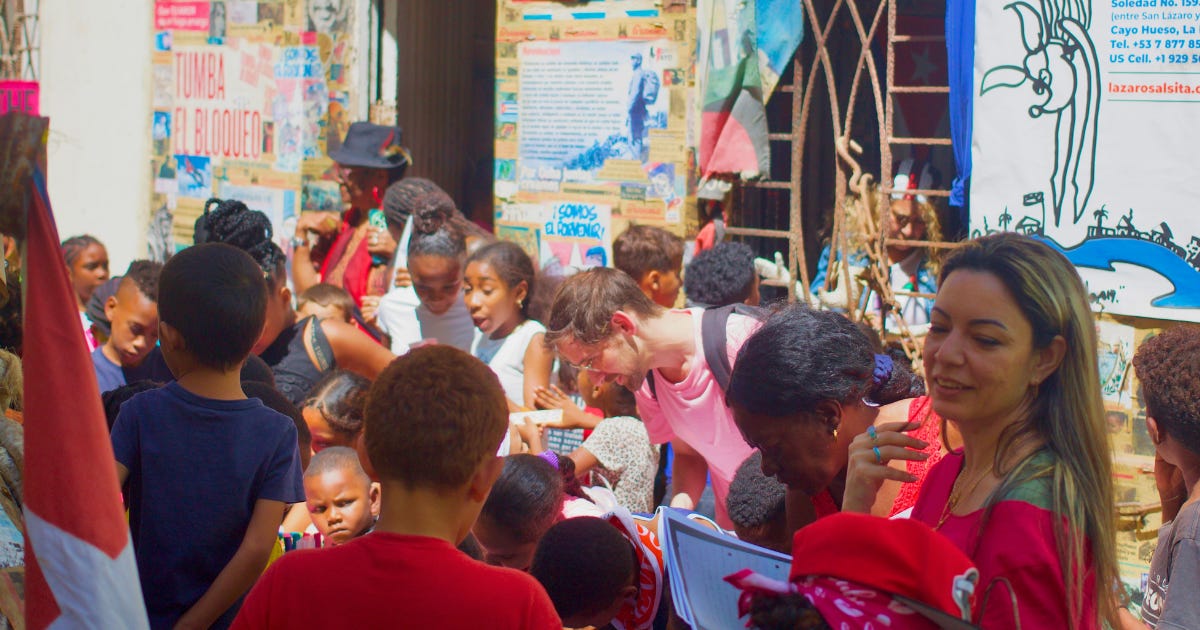
I wanted to begin by stating that the purpose of this delegation was not to suggest that the Cuban people need saving; they have long demonstrated their resilience and ability to sustain their society under extraordinary pressure. Rather, this mission was an act of solidarity and a demand for an end to the decades-long U.S. blockade, which continues to suffocate the Cuban economy and harm everyday Cubans. As a Canadian participant, I went to support the Cuban people, bearing witness to the blockade’s real‑world consequences and delivering material aid to communities and health facilities.
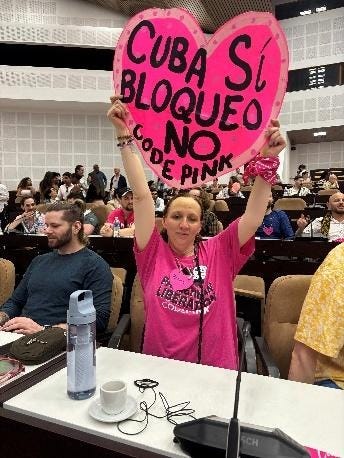
CODEPINK’s Nuestra América Convoy brought together 170 delegates from diverse backgrounds, healthcare workers, lawyers, professors, students, veterans, labour organizers, journalists, artists, and activists from the United States, Canada, Europe, and Latin America. The delegation was organized in collaboration with Progressive International, Cuban Americans for Cuba, the Canadian Network on Cuba, and many other partners. We were able to bring with us:
Over 2860 KG of urgently needed medicines and medical supplies (neonatal equipment, analgesics, catheters, and other critical hospital materials), valued at $599,583 CAD, were collected by Global Health Partners.
Additional suitcases carried by delegates contained supplies tailored for LGBTQ+ groups, artists, students, and animal shelters.
The broader international convoy, part of a coordinated effort by Progressive International, delivered over $553,888 CAD in humanitarian supplies via a charter flight, plus solar panels and generators worth more than $692,380 CAD to support hospitals and essential infrastructure facing electricity shortages. Contributions also came from Europe, Brazil, Colombia, and Mexico, including cancer medicines, solar equipment, menstrual health kits for 1,300 women, and $138,476 CAD in aid for maternity centers.
Contrary to a common narrative, travel to Cuba is not categorically illegal for Americans; there are numerous valid license categories, and multiple commercial flights that operate from Miami. However, the blockade imposes severe restrictions on where U.S. travelers may stay. Our delegation lodged at the Marqués de La Torre, a Spanish‑owned Iberostar hotel, because U.S. regulations prohibit Americans from booking at hotels owned by Cubans. With over 170 members, staying in private homes was logistically impossible, and the hotel’s central location allowed us to avoid additional usage of much-needed fuel.
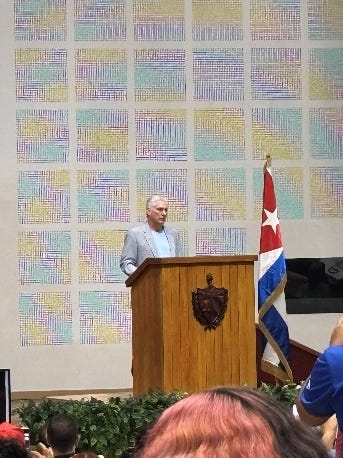
Upon arrival in Havana, we were invited to the Palacio de las Convenciones, where we joined all the other international solidarity delegations. We were surprised and honored to hear from Cuban President Miguel Díaz‑Canel Bermúdez, who personally thanked us for standing with the Cuban people. He gave an impassioned speech on the strength of the Cuban people and their unwillingness to back down to the demands of the United States. While I hold the belief that no government is beyond critique, my focus was on solidarity with ordinary Cubans, not to engage in political debate.
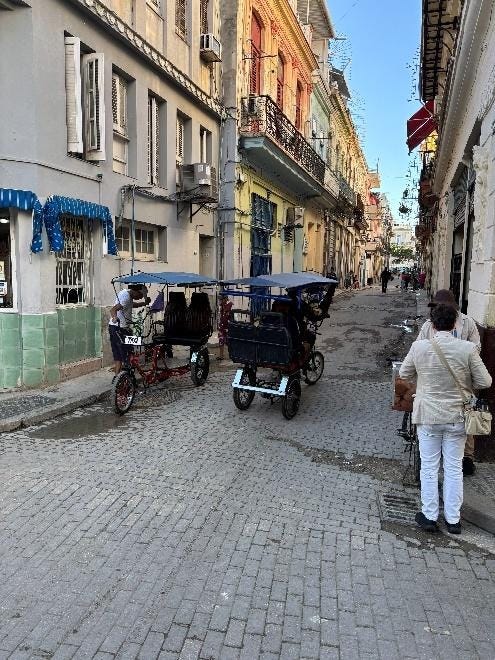
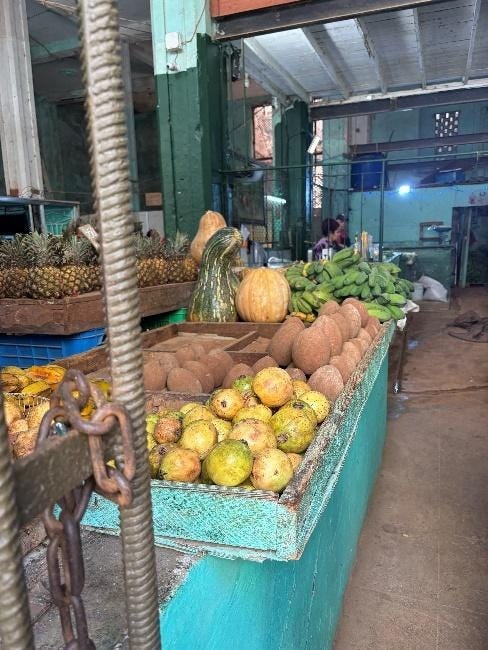
My second day began with a tour of Old Havana, which is undergoing a reconstruction project aimed at restoring historic buildings while creating economic opportunities and social housing. Many restored buildings now host family-run businesses, convenience stores, clothing shops, fruit stands, and restaurants on the ground floor, with social housing above for unwed mothers, pregnant women, and the elderly. I also visited a government-run home for the elderly, provided at no cost. Unlike the often-sterile institutions in Western countries, these homes are warm and welcoming, designed with human dignity in mind.
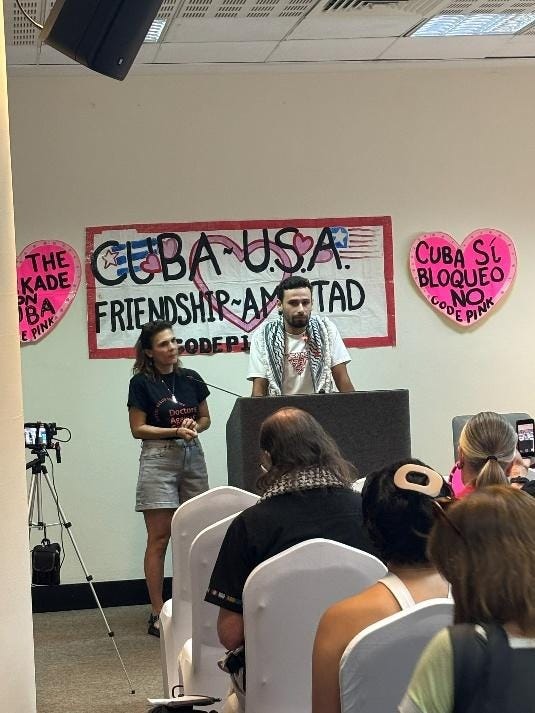
We learned about Cuba’s education system, which offers tuition-free medical training to students from around the world, including many Palestinians from Gaza. The principle that education is a human right, not a business, is taken seriously there.
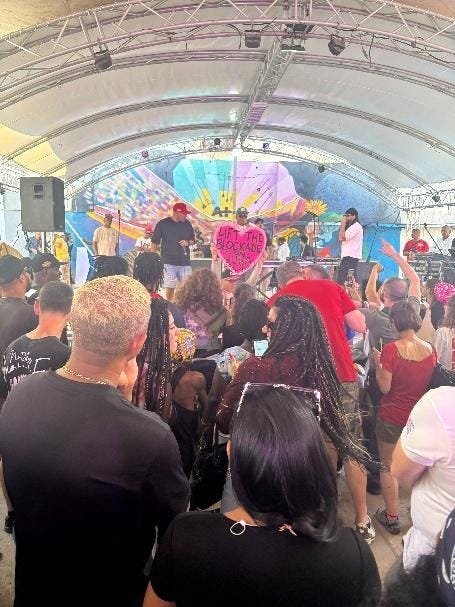
From there, we walked along the Malecón to the Pabellón Cuba for a cultural event featuring Cuban artists and a surprise performance by the Irish rap group Kneecap. The event was a preplanned family gathering; children played and danced, and the atmosphere was joyful.
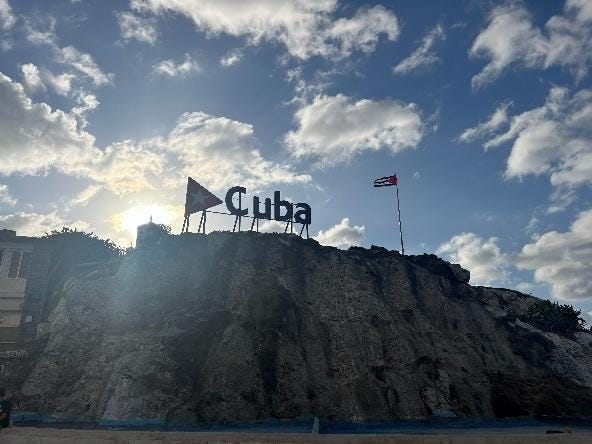
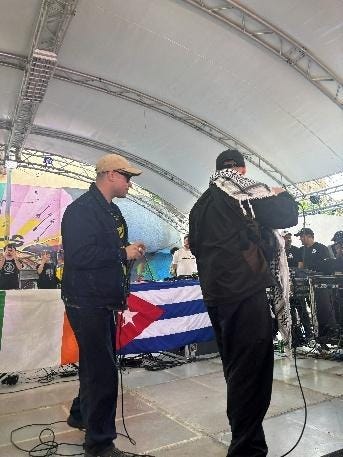
In the evening, I spoke with locals along the Malecón who expressed hope that tourism would recover so they could earn income again. The lack of tourists is stark. Because the U.S. blockade has created fuel shortages, many airlines cannot operate flights to Cuba; even Canadian air service has been cut, leaving Miami as one of the few entry points, a route many Canadians are reluctant to take.
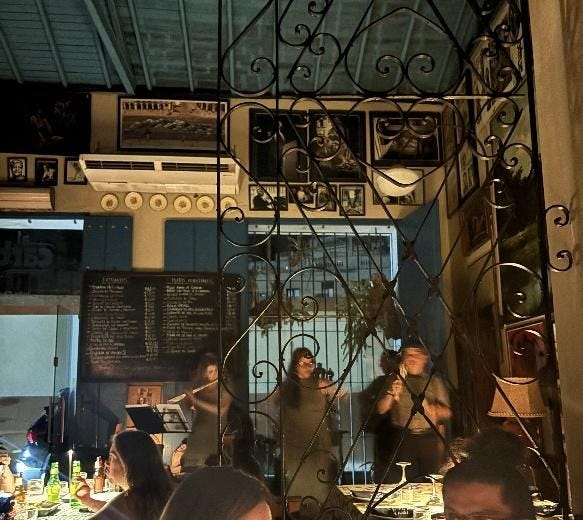
That night we experienced the first island‑wide blackout of our stay. Contrary to subsequent misinformation, the blackout was not caused by the Kneecap concert; the concert’s sound and lighting were powered entirely by solar generators. We walked to a local restaurant, Al Carbon, which remained open by candlelight. I learned that roughly 90% of the gas used for cooking in Cuba comes from Canada, a different fuel from the oil needed for vehicles and generators. The restaurant was filled with locals, and a band began to play. The music that night was profoundly moving; it reflected the resilience and passion of Cuban culture and stole my heart for a lifetime.
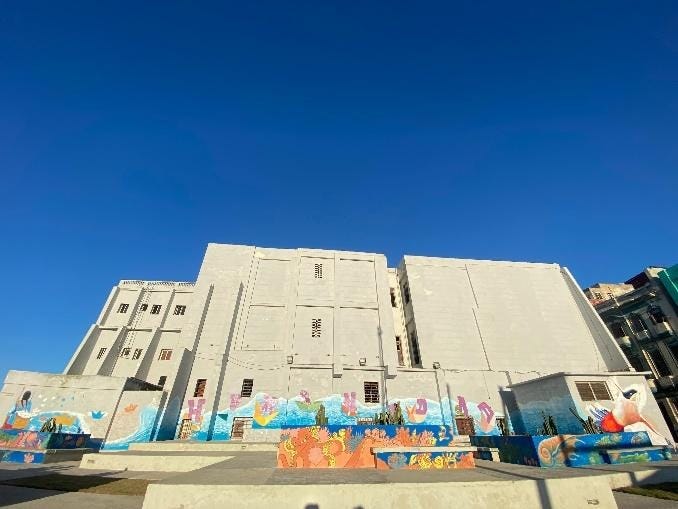
Our final day was bittersweet. We visited a mural project conceived by artist Andy Shallal, muralists Cory Lee Stowers, Nicole Bourgea, and Francisco Letelier, where we painted alongside Cuban artists. In spite of global forces attempting to separate us from the Cuban people and attempting a narrative that vilifies Cuba, we left a beautiful piece of art that displays the solidarity and compassion of this venture.
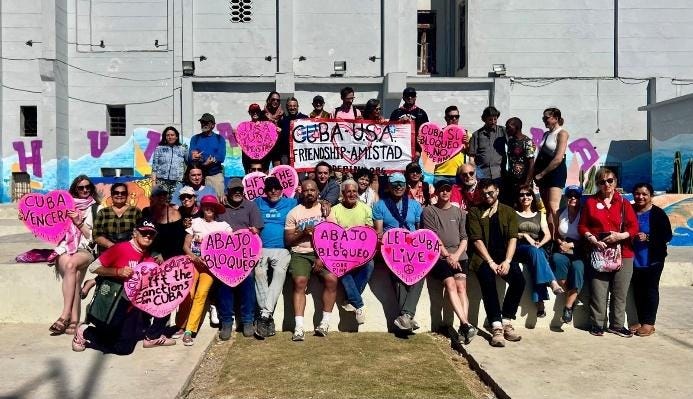
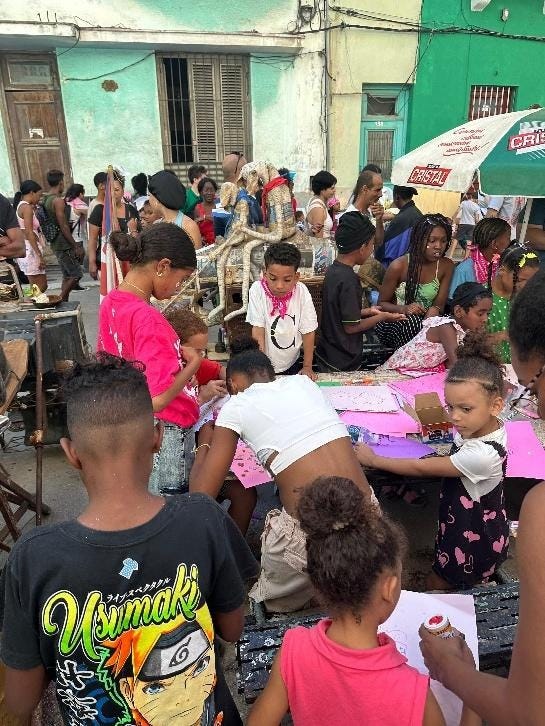
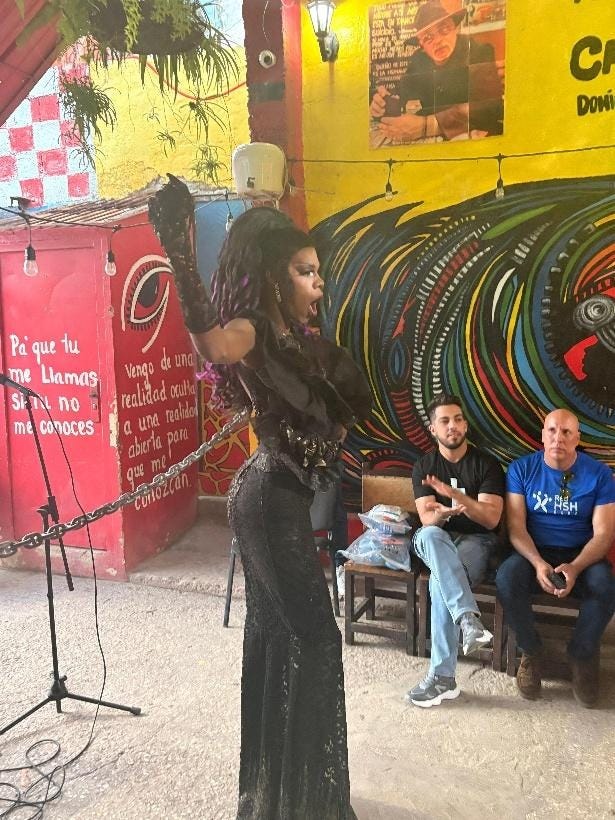
The day’s events also included a block party, an Afro-Cuban drag show, and a pen-pal activity for children to exchange letters with peers from around the world. I was struck by Cuba’s remarkable progress on LGBTQ+ rights. Billboards across the city display rainbows and messages of inclusion. The queer community in Havana is strong, close-knit, and mutually supportive. While their material needs are many, exacerbated by the blockade, their spirit of welcome was unwavering. Learn more with @redafrocubanatrans on Instagram.
Throughout the trip, the effects of the U.S. blockade were impossible to ignore. Fuel shortages mean routine blackouts, reduced public transportation, and limited tourist arrivals, directly hurting families who rely on that tourism income. Medical supply shortages, despite Cuba’s world-class healthcare system, put strain on hospitals and clinics. Yet time and again, I witnessed Cubans improvising solutions: medical staff using manual ambu bags during power outages to keep babies in incubators alive, communities organizing locally, and artists continuing to create.
Our delegation met with Cuban doctors, agroecology experts, HIV/AIDS prevention workers, and migration researchers. We visited organizations that feed vulnerable populations, we helped rebuild a children’s playground in Central Havana and engaged in exchanges with queer activists and Afro-Cuban cultural groups. All these interactions reinforced the understanding that the Cuban people are not passive victims but active agents of their own survival, and that the primary obstacle they face is an external policy of economic strangulation imposed by the United States government and upheld by the spineless politicians here in Canada. We Canadians enjoy the luxury and beauty of Cuba on family vacations; it’s our duty to speak up now when they need us the most. We must demand that Mark Carney and the Liberal government do more to stand up against the blockade, and we must send oil and restart air transportation to increase tourism.
This experience left me deeply moved by the generosity, creativity, and resilience of the Cuban people. I came away with a clear conviction: the U.S. blockade is a humanitarian crisis, and it must end. I also believe that Canada can and should do more. While Canadian tourists enjoy Cuban culture, our government has not taken sufficient action to challenge the blockade or provide meaningful aid. There must be a clear separation between the Cuban government and the Cuban people when it comes to humanitarian support.
I will return to Cuba. The solidarity I witnessed among delegates, between visitors and Cubans, and within Cuban communities was a powerful reminder of what is possible when people refuse to accept unjust policies.
CUBA SI, BLOQUEO NO. Take action for Cuba today!
Anne Kamath is an activist from Windsor, Ontario, whose work began over 20 years ago in opposition to the Iraq and Afghanistan wars. Currently, she serves as one of the organizers of CODEPINK Ontario, where a central focus of her advocacy is supporting the Land Back movement and Indigenous sovereignty. Her two decades of organizing reflect a sustained commitment to peace, justice, and decolonization.
Thank you for your detailed report and your work for CODEPINK and the Cuban people Anne. Someday soon I will go to Cuba.