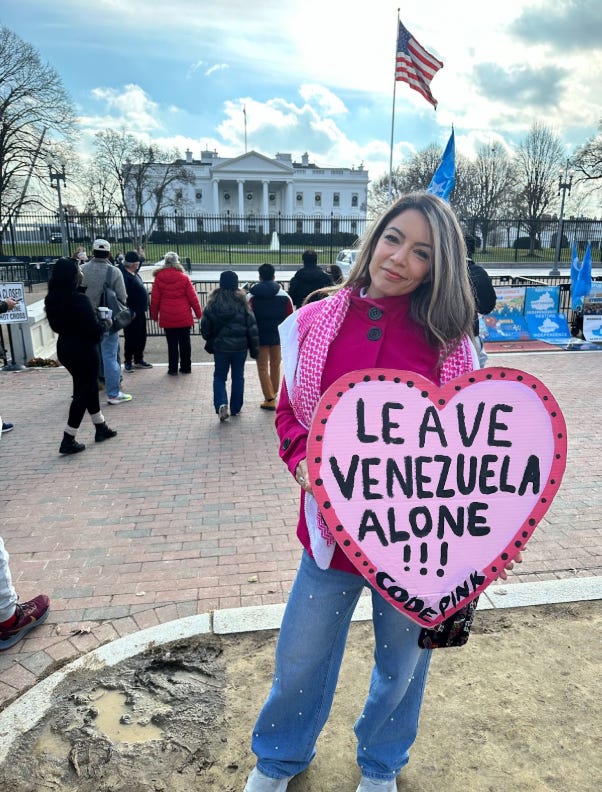
This is War
Why CODEPINK’s work matters more than ever

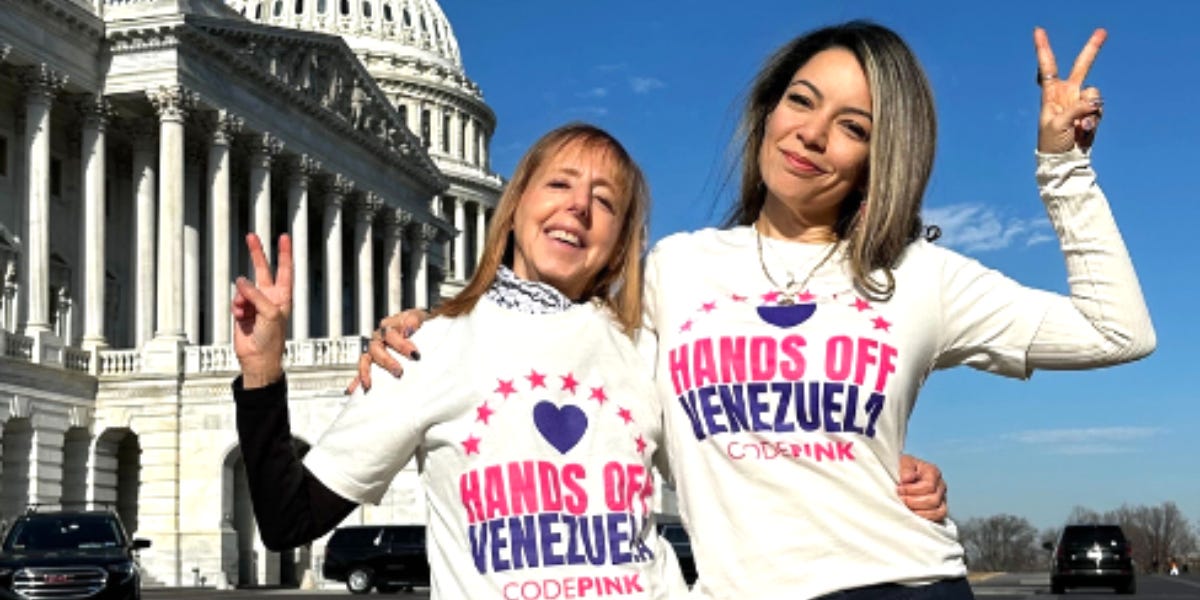
By: Michelle Ellner
As the year comes to a close, I’ve been reflecting deeply on why this work matters to me. Not just as a CODEPINK organizer, but as a Venezuelan American with family, history, and love tied to a country that has been under siege for far too long.
We’re taught that war only begins when bombs fall and armies invade. Most people in the United States reject that kind of violence outright, just as they overwhelmingly oppose a military war on Venezuela. But blockades and sanctions and economic strangulation are also acts of war. They target entire populations, restrict access to food, medicine, fuel, basic infrastructure, and deliberately weaponize hunger, health, and survival itself. It’s collective punishment.
If this continues, the consequences won’t be abstract. We will see horrific images: empty shelves, malnourished children, overwhelmed hospitals, and people scavenging for food. Scenes that echo those coming out of Gaza, where siege and starvation have been normalized as weapons of war. None of this is inevitable. It is the foreseeable result of policy choices, and it can be avoided.
I want to be honest with you: this is personal.
In Venezuela, my brother receives support through a public social program that helps people with disabilities live with dignity. In many countries, this support would be prohibitively expensive or simply out of reach without money or insurance. Similarly, my aunt is almost 100 years old. Since the Bolivarian Revolution, she’s received healthcare without bills, debt, or the fear of having to choose between medicine and food. Just a few decades ago, that kind of care simply didn’t exist.
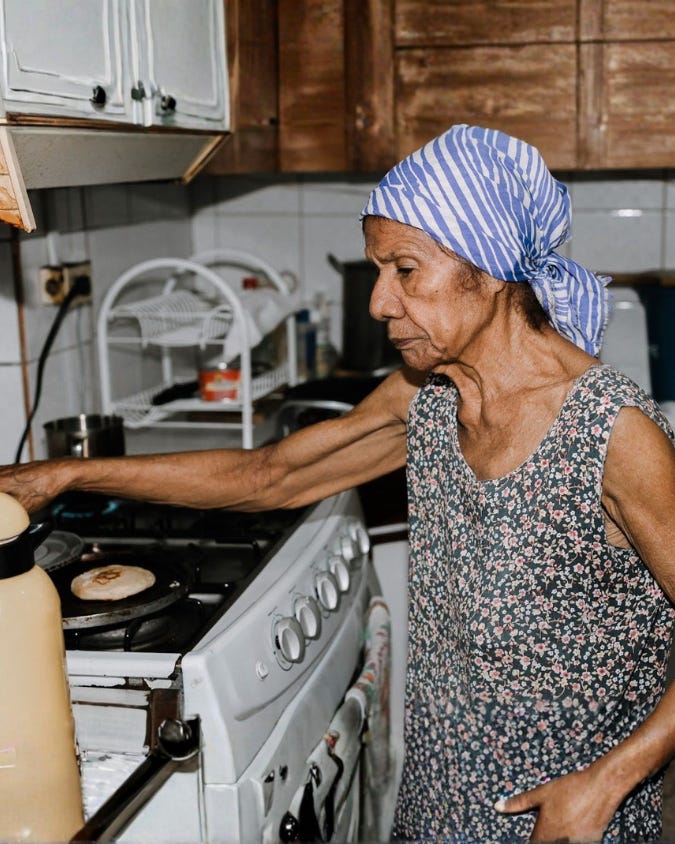
That support still exists today, but U.S sanctions have placed an enormous strain on systems that once functioned with far more stability. Families now rely on creativity, community, and resilience to fill the gaps where resources have been constrained.
At CODEPINK, we’ve been listening to these families, amplifying their voices, and challenging policies that deepen hardship rather than support peace and well-being. We organize delegations, educate the public, and push back against narratives that reduce real people to political abstractions. This work matters because behind every policy decision are families like mine, doing everything they can to care for one another under increasingly difficult conditions.
I don’t share this to romanticize Venezuela. I won’t pretend everything is perfect — it isn’t. But it’s not hard to imagine why billionaires, corporations, and centers of power don’t want policies like these to succeed. A system that prioritizes care over profit is dangerous… to them.
In Venezuela, there are comunas: organized communities producing food collectively, deciding together how to distribute resources, building local power where the state and market have failed elsewhere. There are leaders like Anacaona from the El Panal Comuna, fierce, clear, and unapologetic, showing us what popular power looks like when communities organize to defend their dignity.
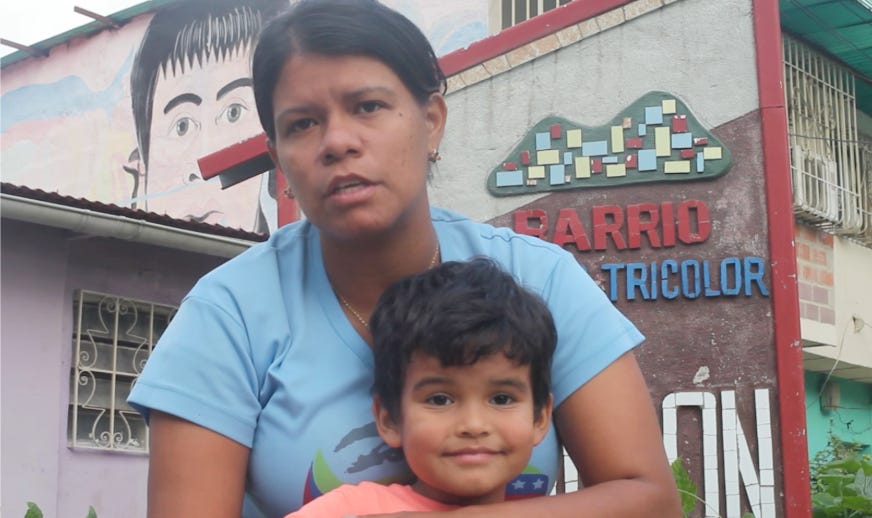
There are people like Alejandra Laprea from Feria Conuquera, who works the land and helps feed her community, and who said something I haven’t been able to shake, “From hunger they can see us furious, but never on our knees.”
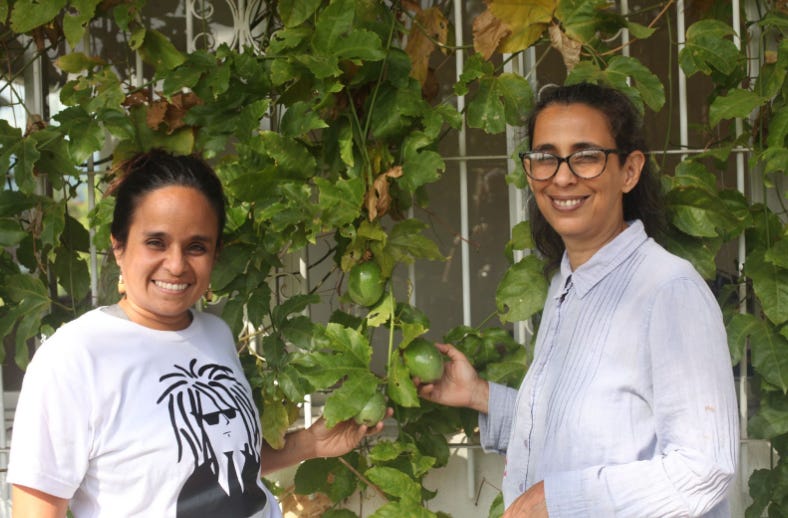
That sentence carries the weight of resistance. It tells the truth sanctions try to erase: collective dignity is more powerful than any weapon.
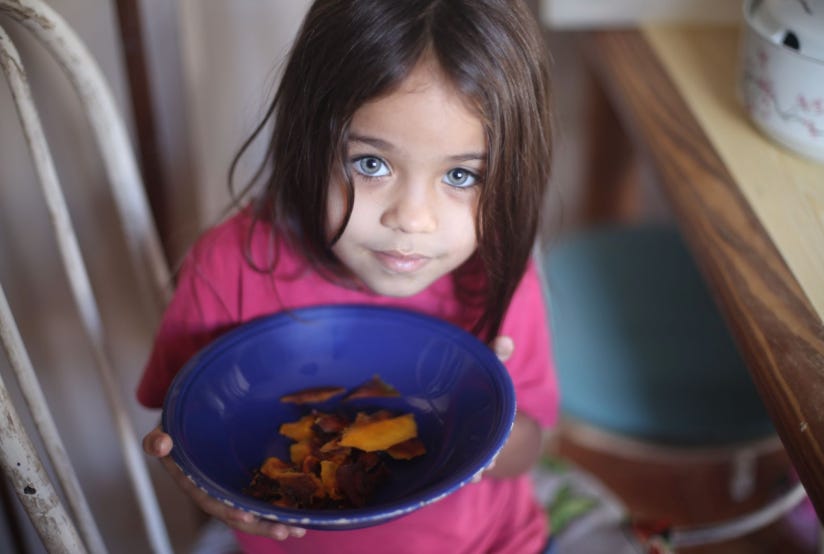
There are families like Yara’s where nothing is thrown away. Her mother repurposed a damaged dishwasher by installing light bulbs inside. “When we have a lot of mangoes,” she told me, “I slice them and put them in here for a few hours. It’s my own food dehydrator.” This is the kind of creativity people rely on to survive under sanctions because resilience has become necessary.
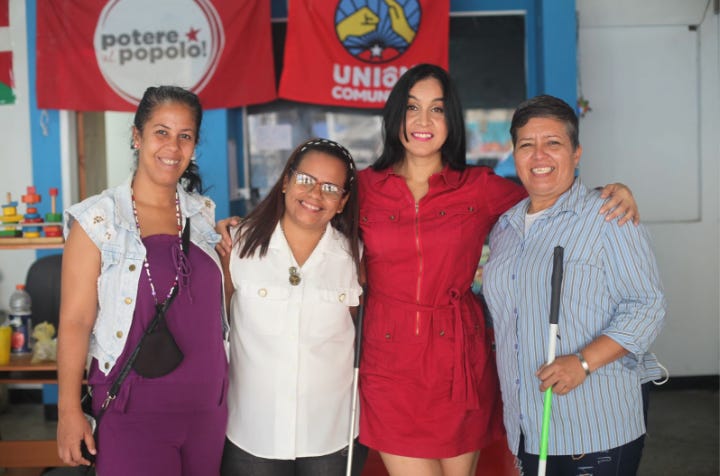
Women with disabilities are among those hit hardest by sanctions, yet Heroínas sin Barrera remain on the front lines defending Venezuela’s right to self-determination. They organize, mobilize, and speak out not despite their disabilities, but with clarity born from lived experience. They know exactly what is at stake when social programs are strangled and resources are cut off. These are women the world is told to pity. Instead, they are guarding the Bolivarian Revolution, because they know that what is under attack is not a government, but the right of people like them to live with dignity.
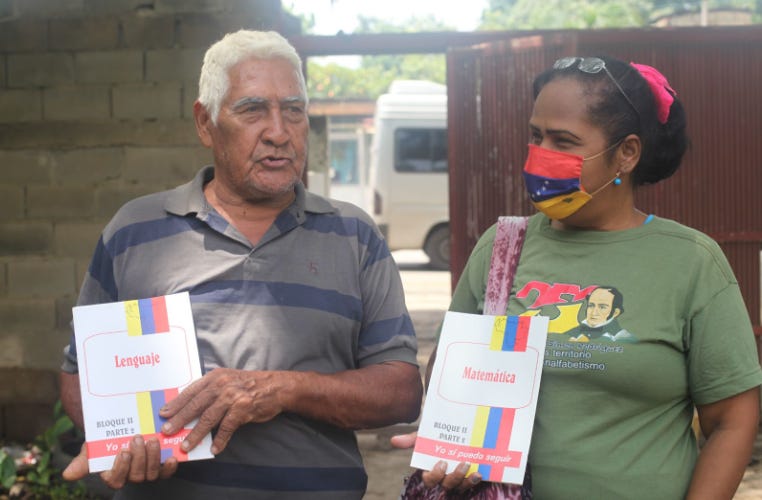
Through Misión Robinson, adults are learning to read, write, and do basic math, many of them for the first time in their lives. Venezuela succeeded in eradicating illiteracy through this program, opening doors that had been closed for generations.
The day I went to meet them, walking through the countryside, I saw a snake and instinctively froze. One of the campesinos laughed gently and said something that stayed with me: “Don’t be afraid of snakes. They usually move away if you give them space. Be afraid of the systems that keep people ignorant and silent.”
And then there are the moments that haunt me.
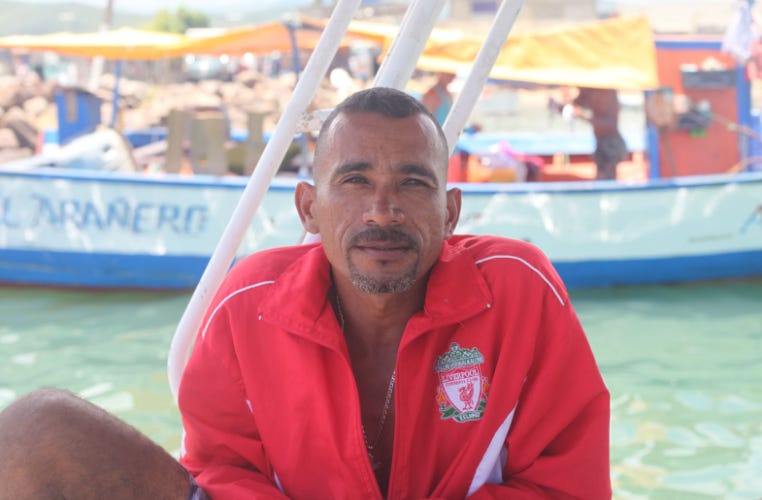
2 years ago I met a fisherman on the coast, Diego Castillo, who told me how sanctions had destroyed his work: fuel shortages, broken supply chains. I still think about him. I wonder how he’s doing now. I wonder if he’s afraid to go out to sea, knowing that the United States is blowing up boats in Venezuelan waters, that vessels like his are being turned into military targets, and that going to work could mean not coming home. I wonder if that fear has already forced him to give up the work that sustained his family for generations.
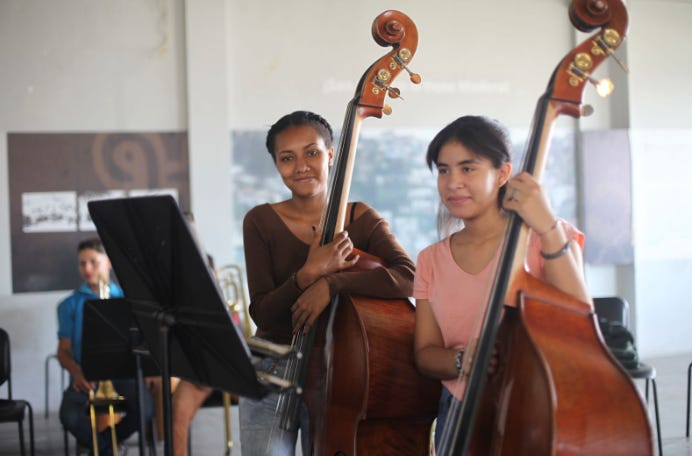
I think of the children who make up Venezuela’s youth orchestras, the largest system of its kind in the world. They deserve the chance to grow, to learn, to create beauty instead of living under constant threat.
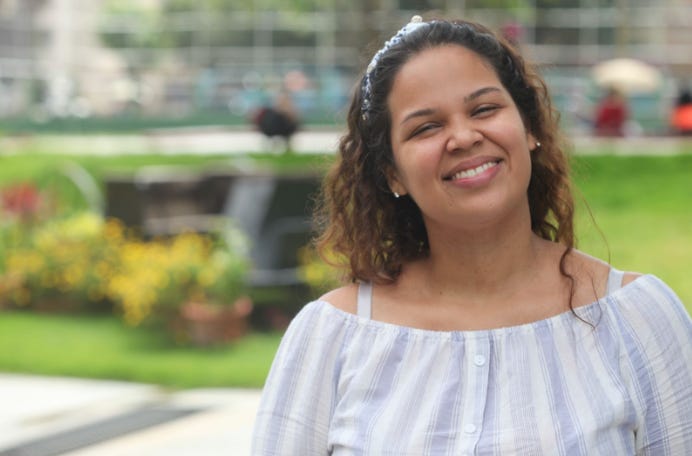
I think of the mothers and women organizers who are expected to be fearless in public, even when they lie awake at night worrying about how to protect their families, their communities, and their future.
These are the human costs of U.S. policy. Not abstractions. Not talking points. Lives.
Next year, CODEPINK’s work on Venezuela will be even more critical. Military escalation, misinformation, and economic warfare aren’t slowing down, and neither can we. We need to keep organizing, educating, sending delegations, challenging war narratives, and standing in principled solidarity with the Venezuelan people.
That’s why I’m asking you today to donate, if you can.
Your support makes it possible for CODEPINK to do the work others won’t: to tell the truth when it’s inconvenient, to stand with people instead of power, and to refuse the logic that says some lives are expendable in the name of profit.
We don’t do this work because Venezuela is perfect. We do it because people deserve sovereignty, dignity, and the right to imagine a different future.
Thank you for being part of this struggle, with your heart, your voice, and your support.
With gratitude and determination,
Michelle Ellner, CODEPINK Latin America campaign coordinator